

Radboud Langenhorst
3 minutes
Token Debt: The Hidden Cost of AI Success
Over the past few weeks, reports emerged that Microsoft is phasing out thousands of Claude Code licences. Not because Claude underperforms. But because internal usage grew so fast that costs started to escalate. Uber is said to have run into similar challenges.
That might sound like a big-tech problem. It's a preview of what many organisations will experience themselves, soon.
Software always got cheaper as more people used it
That was the beauty of software for years. Scale was your friend. More users, lower cost per head. SaaS made that the default model.
AI partly reverses that principle.
The more successfully your organisation adopts AI, the more likely your costs will rise faster than expected. Every prompt costs money. Every workflow costs money. Every agent costs money. What looks like an experiment today can become a serious line item on the P&L tomorrow.
Successful AI adoption gets punished instead of rewarded. That's a fundamentally new problem.

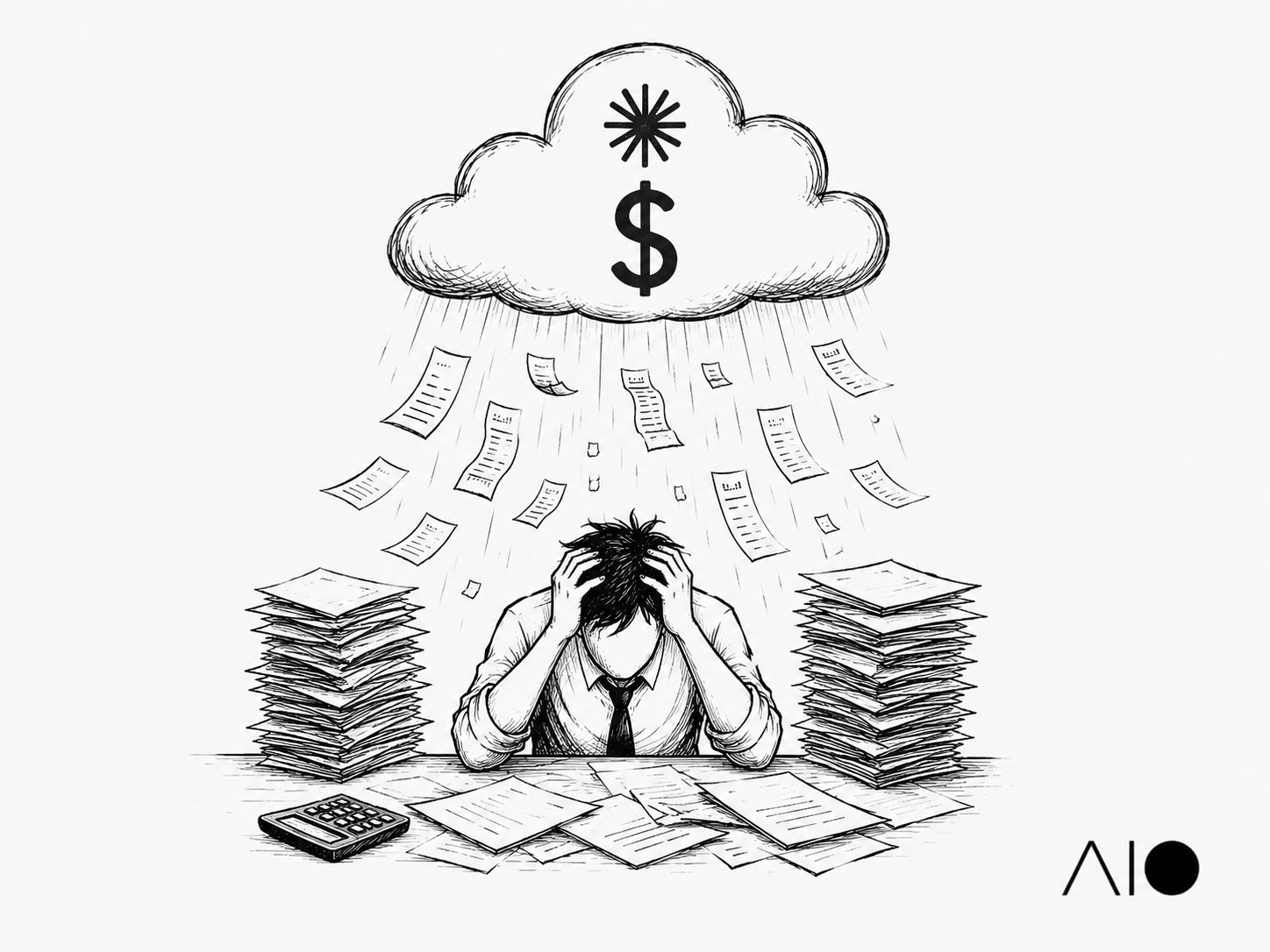
Token Debt
What technical debt was for software, token debt is for AI.
The definition: the invisible costs organisations accumulate when AI usage grows faster than their insight into usage, model choice, and return.
The mechanism is familiar. Organisations start with pilots. The pilots work. Teams want more. Usage scales. And somewhere in that process, you lose oversight. You no longer know which model is being used for what, which workflows actually deliver, and what that daily AI activity is actually costing you.
Until the bill arrives.
The wrong question
The conversation has focused too long on "which model is the best?". That's the wrong question. The better question is: which model is good enough for this specific use case?
Not every task needs to run on the most expensive model. Summarising an internal document doesn't require a frontier model. A simple classification task doesn't either. The quality improvement of the last percentile often costs a multiple. And at scale, that multiple adds up fast. At some point you're no longer paying for results. You're paying for comfort.
AI FinOps becomes a discipline in its own right
Better FinOps features will become one of the most important AI disciplines of the coming years. Not just insight into usage, but real grip on costs, limits, ROI, and model choices.
Organisations will need to manage AI the way they once managed cloud infrastructure. With dashboards, budget limits, cost allocation per team, and deliberate decisions about which model gets used when.
That sounds like overhead. It's the opposite. It's what makes scale possible without financial surprises.
Then there's vendor lock-in
If your entire organisation depends on one model, one pricing structure, and one vendor, every price increase or contract change suddenly becomes your problem.
And those price increases will come. The market is young. Prices move. Models get deprecated or changed. What's the standard today is outdated tomorrow.
That's why we strongly believe in a model-agnostic approach. Not because Claude is bad today or because Amazon's Nova will be better tomorrow (which it probably will), but because nobody knows what the market looks like in twelve months.
What we do know: price, quality, and availability will keep moving. Your strategy shouldn't depend on any one of them.
The bottom line
AI changes every month. Your foundation shouldn't.
That means in practice: insight into usage, deliberate model choices, governance at agent level, and a platform that isn't locked to a single vendor. Not a philosophy. Just good infrastructure thinking.
The organisations that get this right now won't be sitting on a token debt they never saw coming.
Interested in how we host model-agnostic, GDPR-compliant agents that deliver better output and manageable costs? Reach out to us.